
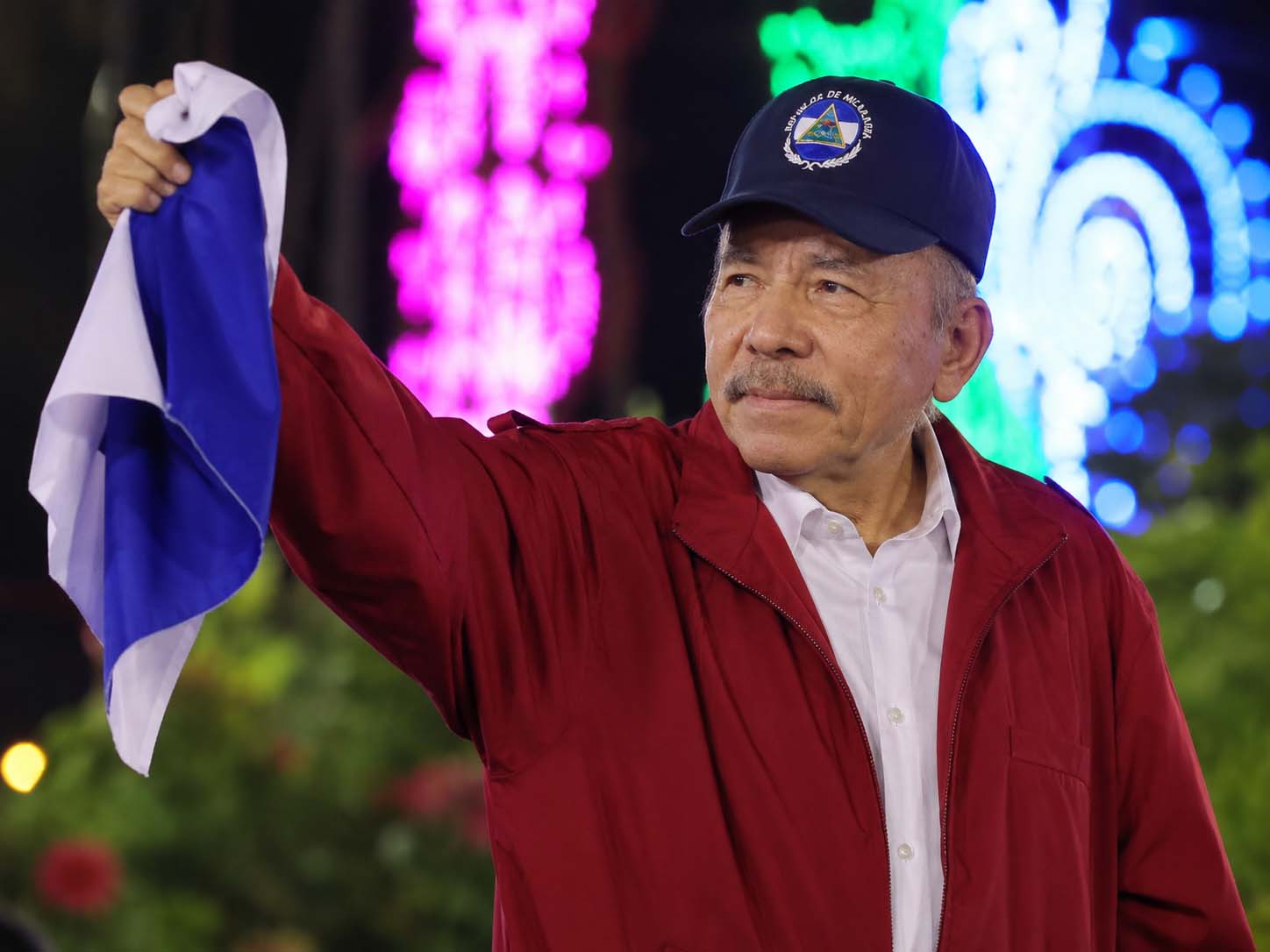
The president offered no legal roadmap, but his message was blunt: the opposition will not get another chance at the ballot box
Daniel Ortega has pushed Nicaragua into darker political territory.
During Sunday’s celebration of the 1979 Sandinista Revolution, the president told supporters that the country would hold no more elections. He framed the decision as a defence against opposition groups he claims serve the United States and Nicaragua’s former Somoza elite.
We heard no detailed legal plan. Ortega did not explain how his government would cancel future votes or rewrite the electoral system.
The declaration still carries enormous weight.
It signals that Nicaragua’s leadership no longer feels the need to preserve even the appearance of an open political contest. Ortega’s current term runs until 2027 after constitutional changes extended the presidential period from five years to six.
Ortega, now 80, has governed continuously since returning to office in 2007. He also served as president between 1985 and 1990, following the Sandinista overthrow of the US-backed Somoza dictatorship in 1979.
His wife, Rosario Murillo, now shares executive power as co-president. Nicaragua’s National Assembly approved that position as part of sweeping constitutional reforms in January 2025. The same package placed more state institutions under presidential control.
For many Nicaraguans, Ortega’s announcement did not arrive in isolation.
The 2021 election took place after authorities jailed leading challengers and dismantled much of the organised opposition. The United States and other international observers rejected that vote as neither free nor credible.
The deepest rupture came in 2018.
Mass demonstrations spread across Nicaragua. The government responded with lethal force. More than 300 people died during the unrest and crackdown, according to human rights organisations and international reporting.
Since then, the state has tightened its grip.
Authorities have imprisoned critics, forced opponents into exile and stripped Nicaraguans of their citizenship. Independent organisations, universities and media outlets have also faced closures or confiscation.
United Nations investigators have accused senior officials of participating in systematic abuses. Their findings include arbitrary detention, torture, political persecution and alleged crimes against humanity. The Ortega-Murillo government has rejected international criticism and portrays its opponents as foreign-backed conspirators.
From our newsroom, we see one question hanging over the country: what remains of political choice when the government itself says voting will disappear?
Ortega presented his announcement as revolutionary protection. His critics will read it differently. They see a government closing the final legal path to peaceful change.
Nicaragua has lived through dictatorship, revolution, war and fragile democracy. Now its president is openly suggesting that citizens will no longer choose who governs them.
That is not a minor change in electoral procedure.
It is a warning about the country Ortega intends to leave behind.
 Ernesto Baltodano